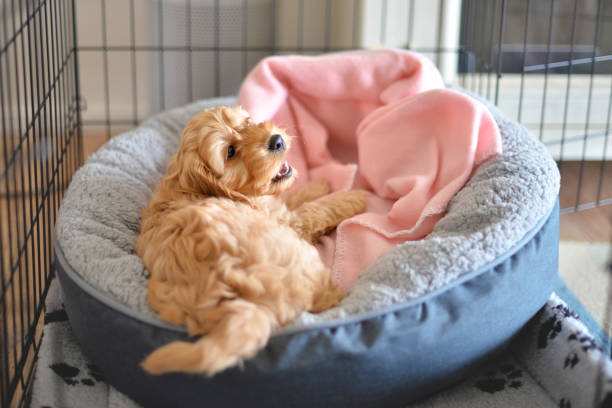
Crate training is a valuable tool for small dog owners—it provides a safe, cozy space for your pup and helps with house training, travel, and preventing destructive behavior. When done correctly, a crate becomes a den-like retreat where your dog feels secure, not confined.
Start by introducing the crate slowly. Leave the door open and place treats, toys, or a comfy blanket inside to create positive associations. Never use the crate as punishment—your dog should view it as a safe zone, not a time-out corner. Keep training sessions short and positive, gradually increasing the time they spend inside while you’re home.
The crate should be just big enough for your dog to stand up, turn around, and lie down. If it’s too large, they may use one corner to sleep and another to potty. For small dogs, a cozy crate feels comforting rather than restrictive. It’s also great for giving them their own space when guests are over or when they need a break.
Crate time should always be balanced with plenty of exercise, play, and attention. When used correctly, crate training supports both safety and structure—and many dogs come to love their little hideaway.
Services